
Find a King George Property Owner
King George County stores its ownership facts across several offices. One screen will not answer everything. Start with the situs address. The County GIS app can map it to an account. The Treasurer's Real Estate Public Inquiry will do the same. The tax inquiry accepts a name, account number, parcel number, or street name. Street mode works without the house number. Open a matching account, note its map number, and compare it against the GIS parcel. That number becomes a stable key for the deed search.
For current ownership, treat the Commissioner's owner-of-record information as an administrative snapshot first. Then search the Circuit Court Clerk's land-record index for the latest deed. The grantee is the party who received the recorded interest. The deed's terms and legal description define exactly what was conveyed. A business or estate holding title should be traced further. Check the entity or probate record under its exact name. This answers who owns the property in the public record. It does not identify occupants or offer a title opinion.
- Locate the parcel through GIS or the Treasurer’s street, account, name, or parcel search.
- Record the map number and the owner name shown in the current county roll.
- Search the latest deed in the free index and compare grantee, legal description, and recording date.
- For an LLC or corporation, inspect the Virginia SCC entity filing; for an estate, check the Clerk’s probate process.
- Use a published mailing address only for lawful property correspondence, not to infer residence.
Check the King George Owner Against Deed
The Commissioner of the Revenue updates property information from deeds. Wills recorded in the Circuit Clerk's office feed it too. The county publishes no fixed roll-refresh interval. A recent deed can be newer than the name on a land-book or tax screen. When the transfer date matters, find the latest grantor-grantee entry. Then inspect the instrument image or clerk copy. The recorded deed controls the recordation event. The assessment roll is only a current administrative view.
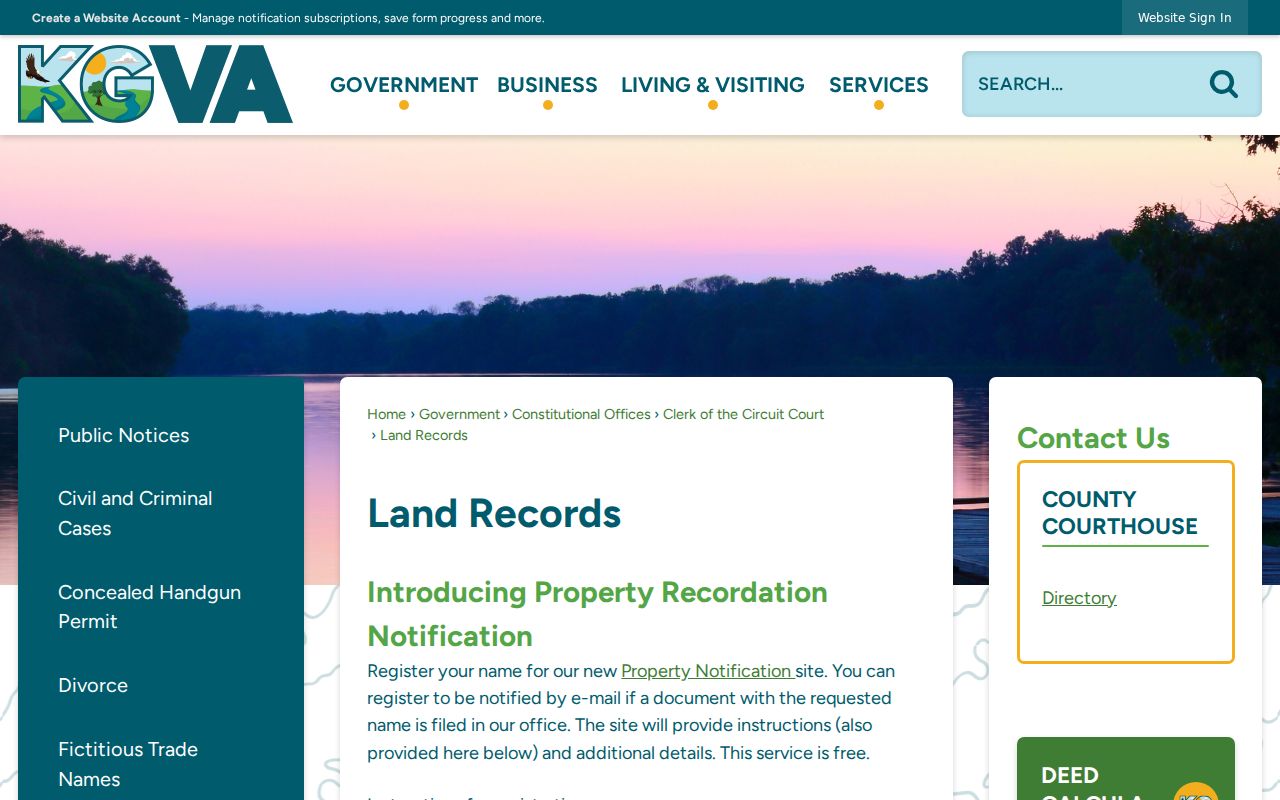
King George's free public land-record index does not display document images. It supplies a pointer. That may be a recording date, party name, document type, or book/page reference. The Clerk's Land Records page explains how to order an image or copy. A land record can also surface a deed of trust. It may show a release, easement, lien, or lis pendens. None of those change the owner field, yet each matters to a broader property review.
Start with the King George free index for the deed pointer. The Clerk's official page then distinguishes that free index from the paid image access.
Before trusting a name as the current owner of a parcel, verify it. Compare the recorded grantee and legal description against the county roll.
King George Owner Sources and Record Types
Every source contributes a different clue. The tax account ties a taxpayer name to assessment and payment data. GIS locates the parcel and may link to county data, though identify-card fields vary. The deed index points to recorded parties and legal descriptions. Virginia entity records can clarify a company name. But they do not reveal who benefits from it. Put the source date and type beside each owner name.
| Source | Owner Info It Gives | Access |
|---|---|---|
| Commissioner land book / tax account | Owner or taxpayer name and county assessment context | County property pages and inquiry |
| Circuit Court deed index | Grantee, grantor, instrument type, and record pointer | Free index; image access is separate |
| Virginia SCC entity record | Entity status, agent, office, and filing history | Public Entity Name or Entity ID search |
| County GIS | Parcel location and map reference; live fields vary | Public map and county apps |
An owner of record is not always the occupant. A parcel may belong to an absentee owner, a trust, an LLC, an estate, or several co-owners. The tax mailing address may be somewhere else entirely. That address helps with notices or a property-related letter, but it proves nothing about where anyone lives. The public record answers recorded ownership, not resident identification.
King George Owner Addresses: Situs vs Mailing
The situs address marks the parcel's physical location. The mailing address is where tax notices and correspondence go. In King George County, a rural road name, subdivision label, historical road name, or postal city may not match the legal description word for word. In other words, the postal label can drift from the plat. A mailing city of Dahlgren or King George does not create a separate recorder or assessor. Each office serves the whole county. Confirm the owner record belongs to the parcel before relying on it. Match the GIS map number against the deed description.
The Treasurer inquiry's street mode asks for a street name without a house number. It can return several accounts. The search instructions explain how to select a result and open payment history. Treat that result as a tax-account clue and compare it to GIS. The county's My Property hub links the property search routes together. The Public Terminal guide documents each tax inquiry field.
King George Owners: LLCs and Trusts
The owner of record in King George County is not always a person. A deed or tax roll can name an LLC, corporation, trust, estate, executor, administrator, or fiduciary instead of a household. Businesses take one route. The Virginia SCC Clerk's Information System lets you search by Entity Name or Entity ID. The filing history shows dates, filing numbers, types, and page counts. The record may also list a registered agent or principal office. Still, it does not prove beneficial ownership. Estates follow a different path. The Circuit Court Clerk handles probate by appointment. A will, qualification order, executor's deed, administrator's deed, partition order, or recorded certificate can explain how the parcel moved. A death certificate or obituary may help identify a person. Neither document transfers the land. Search the decedent, estate, fiduciary, and heirs, then match the legal description to the current property record before drawing a conclusion.
Official entry points are the Virginia SCC entity search and the King George Circuit Court page.
Limits of a King George Owner Record
A King George owner record answers one question. It does not say who lives in the home, whether anyone is reachable at the mailing address, or whether a parcel's boundary sits exactly where the GIS line appears. It is no substitute for a title search either. Virginia offers protected-address options for eligible participants. Sensitive identity records carry their own access limits. Treat what you find as a property record, and avoid republishing details you do not need.
The county's GIS description is static. It cannot confirm the exact label or full field set of every live parcel card. When the app displays an owner field, note its wording, the parcel number, and the date you viewed it. A Treasurer inquiry can return a name tied to a tax account. Never relabel that result as resident or beneficial owner. If the name belongs to a trust, estate, or company, keep the entity name exactly as recorded, then use the deed to confirm which grantee received the property interest.
For a recent or disputed transfer, start with the deed. Note the grantor, grantee, recording date, and legal description. Compare those details against the Commissioner's roll. The free index locates instruments but omits the image. The Clerk's Land Records page explains office copies and remote image access. A name match without the instrument may point to another parcel, a partial interest, or a different person with the same name. The dependable answer matches the tract as well as the party.
Instrument type matters too. The index can point to a deed, deed of trust, release, easement, or lien. A party named in each one does not hold the same role. A named lender is not the owner. A release can close out an encumbrance without conveying the land. Read the document label and the granting language before calling anyone the owner of the parcel.
Some questions belong to a specific office. The Commissioner maintains the land book and owner-address record. The Treasurer handles payment status. The Circuit Court Clerk keeps recorded instruments. Include the map number and record type in any request. A tax balance or business filing adds context, but neither replaces the deed when the question is who received the property.
Lawful use. Use a King George owner lookup for property research, due diligence, or civic understanding. Do not use a name or mailing address to stalk, intimidate, or harass anyone.