
Trace King George Former Owners
Begin with the parcel's latest deed. Name the grantee. That person becomes the grantor in the next earlier instrument you hunt for, and the chain forms one transfer at a time. A chain is a record of conveyances, though, not a roster of everyone tied to a street address. A deed of trust secures a loan. A release ends that security. Neither one makes the bank a fee owner, so keep instrument type and legal description beside each name to separate lienholders and fiduciaries from true prior owners.
| Backward step | Index role | Record to capture | Next move |
|---|---|---|---|
| Current transfer | Current grantee | Recording date, grantor, legal description | Search the grantor as an earlier grantee |
| Prior transfer | Earlier grantee | Book/page or instrument number, parcel clues | Compare tract, acreage, and adjoining owners |
| Older book or estate | Prior owner or fiduciary | Will, executor deed, plat, or book reference | Request the older image or archival source |
Treat this backward table as a research aid rather than a sample King George conveyance. Fill it with actual names and references from the county index only after the parcel's description matches.
| Source | Years It Covers | Where Held | What It Shows |
|---|---|---|---|
| Free deed index | Index coverage; images stated 1721 to present | Circuit Court Clerk / public site | Names, document type, date, and retrieval pointer |
| Deed books and images | County states digital land books from 1721 onward | Clerk office or paid remote system | Earlier conveyance and legal-description detail |
| Historic plats | No single year run published | Clerk land records; GIS for orientation | Lot, road, access, acreage, and adjoining tract clues |
| Land book and probate records | Exact historic run not stated | Commissioner, Clerk, and Library of Virginia | Assessment or fiduciary context for a transfer |
For a recent transfer, pull the index entry. Then inspect the deed image itself. Older chains ask for a book and page or instrument pointer, matched against the county's stated land-book span whenever a search reaches the eighteenth century. The free index stops short of images. Use the King George public index as the locator. The Clerk's Land Records page covers paid access and office copies. The index search screen is only a starting surface; it does not resolve whether an older tract matches a modern parcel.
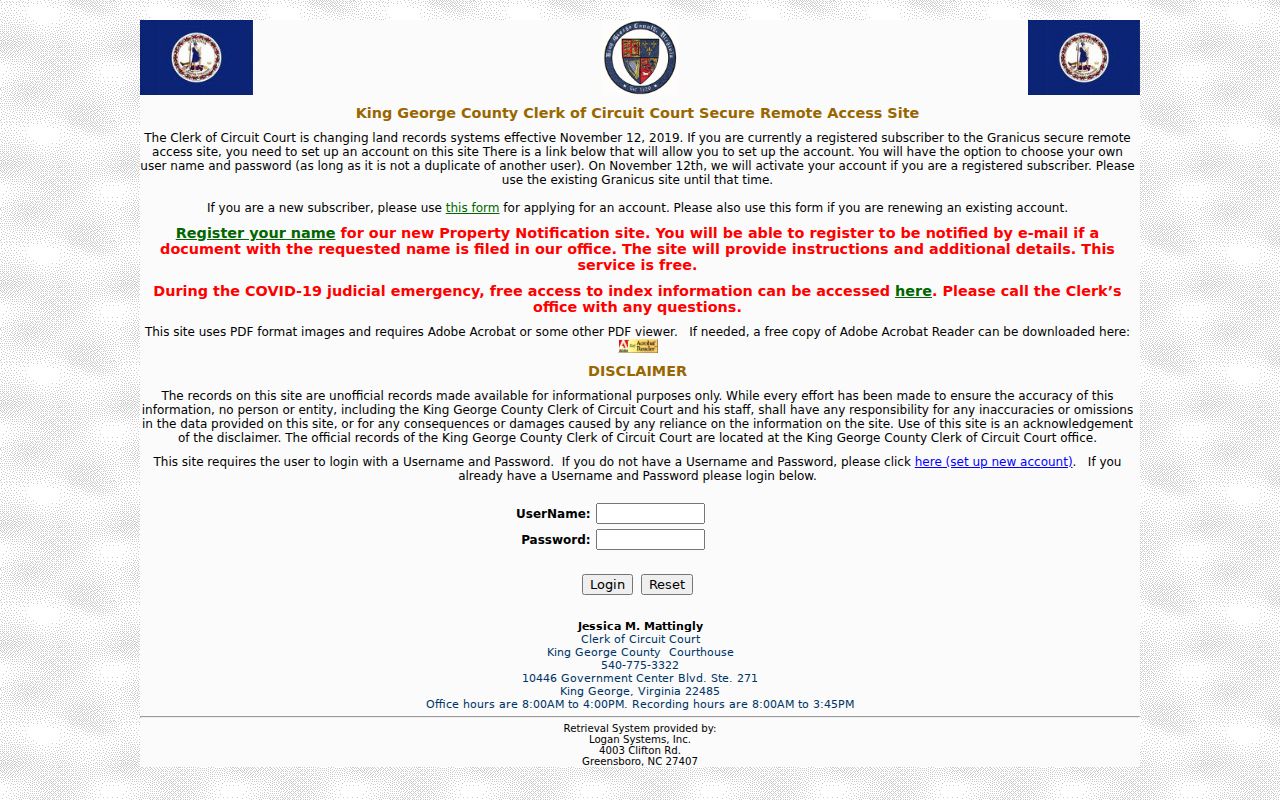
Record the index reference before moving to an image, clerk copy, or physical volume.
King George Former Owners by Grantee
Open the index at the period when the latest instrument was recorded and search the current grantee. Read the deed for the grantor's name. Then search that name as a grantee in an earlier period. Repeat the cycle. Compare the legal description each time. Names change, parcels divide, a trust or estate can intervene, and an older deed may describe the land only by acreage and neighbors.
- Use GIS or a tax record to identify the parcel and save its map number and legal description.
- Find the latest deed index pointer for the current grantee or parcel clue.
- Read the grantor, grantee, instrument type, document and recording dates, and land description.
- Search the prior grantor as grantee and repeat with the earlier deed.
- Mark a gap or estate transfer for Clerk or archive review instead of filling it by inference.
The county's online index is free. Image access is separate. Clerk staff will help start a search but do not perform extensive title research. For the present-day side of the trail, the King George owner lookup guide lays out a full current-owner method.
Walk the King George Former-Owner Chain Backward
Today's grantee is yesterday's grantor. The next question is who conveyed that tract to the person just identified. A name match alone proves little. Check the map or parcel number, book and page, acreage, subdivision lot, roads, creeks, and adjoining owners. Small details settle big questions. A quitclaim, fiduciary deed, or partial conveyance may force you to read several instruments from the same period before the sequence becomes clear.
- Locate the current grantee’s instrument and note the land description.
- Read the grantor and search that party as an earlier grantee.
- Compare instrument dates, recording dates, acreage, and boundary calls.
- Move to a book, older image, or probate file when the index trail requires it.
- Grantor / grantee
- The party conveying an interest and the party receiving it.
- Chain of title
- The ordered sequence of recorded transfers for a parcel.
- Legal description
- The land description that can connect an old instrument to a modern parcel when the address has changed.
King George Owners in Books 2–4
The county's digital land books span 1721 to the present. A 2024 State-of-the-County report credits Library of Virginia grant support for preserving and digitizing Deed Books 2, 3, and 4, which cover 1735 through 1765. Those volumes are the colonial-period lead. The free index still shows no document images. Record the book and page or instrument reference before requesting an image or clerk copy.
Early deeds often describe land by acreage, waterways, roads, and adjoining owners rather than a street number. Those details connect transfers across a chain. The county report summarizes the preservation work. The Library of Virginia supplies the state archival catalog and research referral.
The county's land-record page states its access rules and historical span. It displays no particular old deed image.
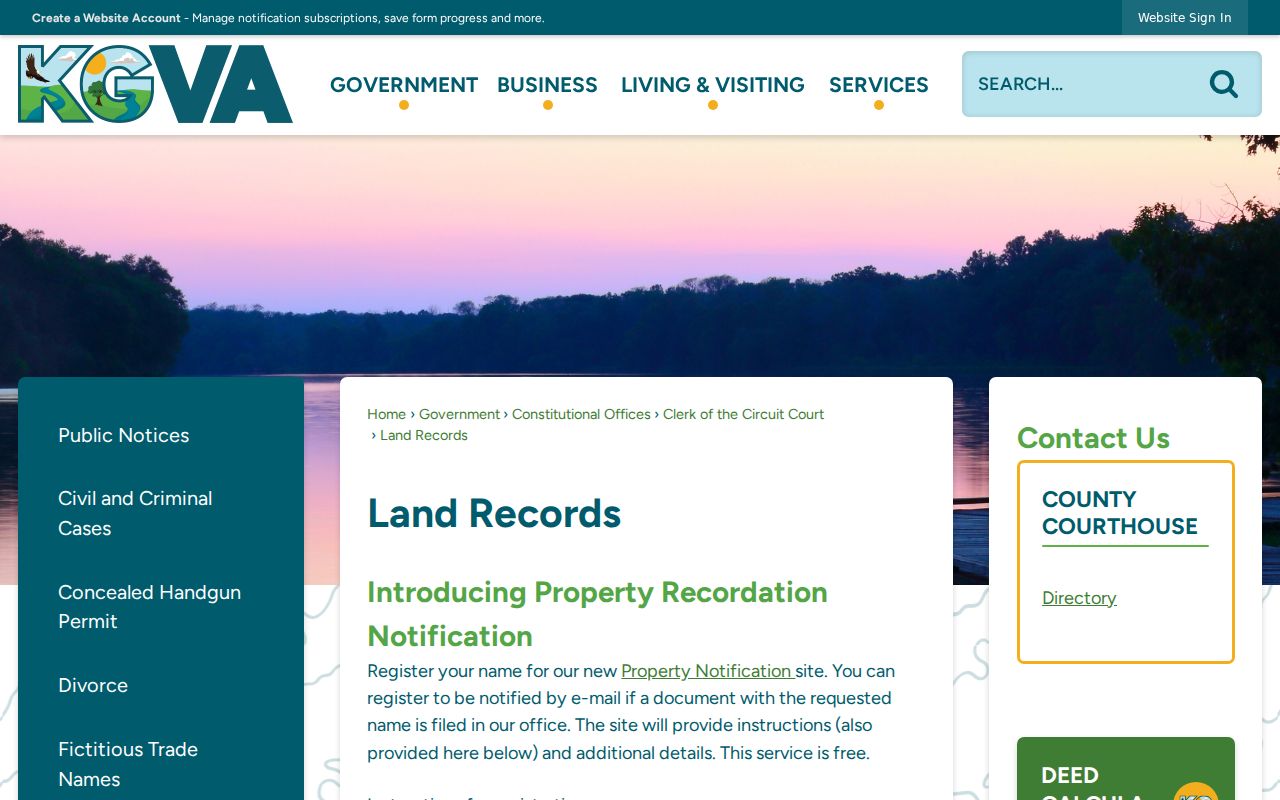
Ask for the exact historic book and reference. Never assume the material is searchable by a current street address.
King George Former Owner Estate Transfers
A former owner may have died before an executor's or administrator's deed appears in the record. King George probate matters go through the Circuit Court by appointment. Look for a will, an order of qualification, a fiduciary deed, a partition order, or a recorded certificate or affidavit. A death certificate or obituary supports identity work. Neither one transfers property. Search the decedent, the estate name, the fiduciary, and the heirs, then match the legal description to the land instead of trusting a surname.
Virginia vital records follow separate eligibility and release rules. VDH guidance makes death records public after 25 years. Before that, only qualifying family members with valid identification may obtain them. Vital records support the story. They do not convey title. When the chain turns on a will or court order, ask the Clerk about the file and copy process, and check whether the dispositive instrument was later recorded in the land records.
King George Former Owners When Roads Change
Old addresses fail as chain keys. Roads get renamed. Addresses get reassigned. Sometimes the parcel was carved from a larger tract long before the current deed was recorded, which means the address alone cannot carry you backward through King George property records. Lot and block details send you to the recorded plat. Metes-and-bounds calls take more work. Compare the directions, monuments, acreage, roads, creeks, and adjoining owners named in each deed. King George GIS handles E-911 addressing, so a modern GIS map can help you get oriented. The deed and plat still carry the recorded description. A street-name search may return several parcels at once. Compare map number, acreage, and boundary calls.
The county reports no courthouse fire or known record-loss event, so do not blame a gap on some disaster without proof. The break may reflect an estate, a spelling variation, a subdivided tract, or an older book that requires manual retrieval.
How Far King George Deed Records Reach
King George deed records reach back centuries. The county's land-record page states that digital land-book images run from 1721 to the present. No separate online-index cutoff is published beyond that stated image coverage. Older deeds may need a book-and-page reference. Others need a Clerk copy. Some call for archival help. The county's preservation project on Books 2 through 4 offers a concrete path into the 1735 to 1765 records. Historic court, probate, and tax-book runs need separate confirmation. Try the Library of Virginia for archival catalogs. Ask the Clerk or Commissioner about county-held books, and remember that directory runs are their own project.
One caution belongs here. An older deed you cannot locate was not necessarily lost, and an ownership gap does not signal a broken title. Name the next document you need, then follow that office's access process for the collection that holds it.
Lawful use. Former-owner research in King George can support house history, genealogy, and property diligence. Do not use names or addresses to track or harass a living person.